
Are you looking for the best way to handle your recreational vehicle during the off-season? Finding a dedicated place to park your camper or RV is a common challenge, but renting a storage space is often the most practical solution for keeping your driveway clear and your vehicle ready for the next adventure.
TL;DR: Quick Camper Storage Takeaways
- Clear it out: Always remove food and perishables before storage to avoid pests.
- Tire maintenance: Use jacks to lift weight off your tires to help prevent flat spots.
- Seal and cover: Wash, wax, and cover your camper if storing it outdoors to mitigate environmental damage from the sun and rain.
- Fluid management: Drain all water lines and tanks if storing for a long time to prevent freezing or stagnation.
- Choosing space: Measure your camper (including the tongue) to choose the right unit size. Use our storage location finder to find a facility near you.
Table of Contents
- Why Camper Storage Matters
- Types of Camper Storage
- Short Term Preparation
- Long Term Preparation
- Choosing the Right Size
- Frequently Asked Questions
Why Camper Storage Matters
With the RV industry continuing to grow, more owners are looking for reliable ways to manage their vehicles when they aren’t on the road. According to recent industry data, hundreds of thousands of new RVs are shipped annually, contributing to a massive fleet of vehicles that need a place to stay between trips.
Whether you are a weekend warrior or a seasonal traveler, finding the right storage space helps you maintain your vehicle’s condition. While a garage or driveway might work for some, dedicated storage facilities provide a consistent, designated space for your vehicle, freeing up your own property.
Types of Camper Storage
Before selecting a rental, it helps to understand the different ways you can store your vehicle. Most facilities offer two main options:
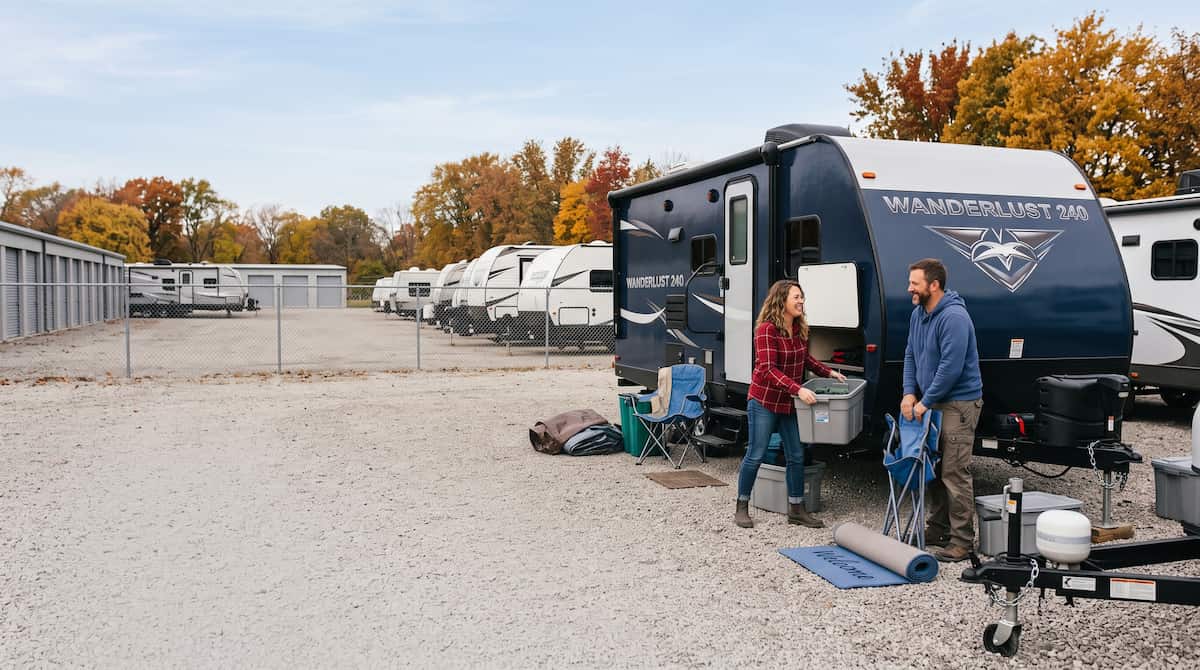
- Outdoor Parking: These spaces are located within the facility grounds, often behind a perimeter. They are suitable for most motorhomes, travel trailers, and fifth-wheel trailers. If you choose this option, a high-quality, breathable cover is recommended to help mitigate wear from the elements.
- Indoor Drive-Up Units: These are garage-style spaces with large doors, often 7-ft. or taller. They allow you to pull your vehicle directly into the unit. This option helps mitigate environmental factors like wind, sun, and rain.
Short-Term Preparation
If you are storing your camper for a month or two, you can keep the process simple.
- Empty the Interior: Remove all food. Even if you are only away for a short time, food can attract unwanted pests.
- Tire Pressure: Inflate tires to the manufacturer’s recommended pressure. If possible, deploy your stabilizer jacks to take some of the weight off the tires.
- Documentation: Ensure your registration and insurance documents are current.
Long-Term Preparation
When storing for the off-season, a little extra effort goes a long way in preparing your vehicle to sit for a while.
- Deep Clean: Remove all crumbs, wrappers, and debris from cushions, cabinets, and storage compartments. Wipe down the fridge and freezer.
- Exterior Maintenance: Wash and wax the exterior. Check for any cracks or holes in the seals or roof, and reseal them as needed using appropriate materials.
- Fluid Management: Drain all freshwater systems, including plumbing lines, holding tanks, and water heaters. If you live in an area with freezing temperatures, use RV-approved antifreeze in the water lines for an extra layer of mitigation against freezing.
- Refrigerator Care: After cleaning the fridge and freezer, leave the doors slightly cracked open. This helps prevent moisture and mold buildup.
Choosing the Right Size
Choosing the right storage unit comes down to dimensions. When you measure your camper, be sure to include the hitch or tongue in your length calculation. While every facility varies, here is a general guide for size comparisons:
To better understand the space requirements for your vehicle, it helps to categorize common motorhome types. While the terms “camper” and “RV” are often used interchangeably, motorhomes are generally categorized into three distinct classes based on their design and size:
- Class A Motorhomes: The largest option (26 to 45 ft.), built on heavy-duty chassis. These offer bus-like dimensions and residential-style amenities, making them ideal for long-term travel.
- Class B Motorhomes: Often called “camper vans,” these are the most compact (18 to 24 ft.). Built on standard van chassis, they prioritize maneuverability and efficient, space-saving design.
- Class C Motorhomes: The “middle ground” (20 to 33 ft.). Easily identified by their signature over-cab sleeping area, they offer a functional balance of living space and drivability for families or small groups.
When planning your storage needs, knowing your vehicle class is the first step toward selecting the right rental option. Whether you are storing a compact Class B van or a larger Class A motorhome, always measure your vehicle’s total length, including any extensions or hitches, to ensure you choose a space that accommodates your specific setup.
Ready to Find Your Space?
Are you ready to clear your driveway? Check out our storage location finder today to see available outdoor parking or drive-up units near you. Whether you need space for a month or the entire off-season, we have rental options to fit your needs.
Note: For further reading on preparing your RV, check out our RV storage guide for more tips and information.
Frequently Asked Questions
Q: How much does it cost to store a camper?
A: Storage costs vary based on the type of storage (indoor vs. outdoor), the size of the space required, and the specific facility location. Our website always displays current rates and active promotions to help you find an option that works for your budget. Use our storage location finder to see real-time pricing at a facility near you.
Q: How do I know if my camper will fit in a unit or parking space?
A: The best way to know is to measure your camper, including the hitch or tongue, before you arrive. Use these measurements to compare against available unit sizes. If you are unsure, our facility teams can help you understand the dimensions of our available outdoor parking spaces and indoor drive-up units.
Q: What is the difference between indoor and outdoor storage?
A: Outdoor parking spaces provide a designated area within the facility gates, which works well for many motorhomes and trailers. Indoor drive-up units are enclosed spaces that you can drive into; these provide an environment that can help mitigate exposure to outdoor elements like wind, sun, or rain.
Q: Is climate-controlled storage necessary for my camper?
A: Climate-controlled units are designed to maintain an interior temperature typically between 55°F and 80°F. This environment helps mitigate potential damage caused by extreme temperature fluctuations or high humidity. While not mandatory for all campers, it is an option to consider if you want to limit the vehicle’s exposure to environmental changes.
Q: Can I access my camper once it is stored?
A: Yes. We offer convenient access hours so you can get to your vehicle when you are ready for your next trip. Please check the specific access hours for the facility where you choose to store your vehicle by visiting our location pages.