
TL;DR: Transitioning from summer to fall is a great opportunity to swap out your warm-weather items with cold-weather gear to help keep your home organized. By properly preparing aquatic gear, outdoor equipment, clothing, and lawn tools, you can keep your home clutter-free as the seasons shift. Learn the top four items to store for the summer plus three essentials to retrieve for the autumn months, and how renting a seasonal storage unit makes the swap effortless.
Table of Contents
- Why Should You Use Seasonal Storage When Summer Ends?
- Summer Gear to Move Into Seasonal Storage
- Fall Essentials to Pull Out of Storage
- Selecting the Right Unit Size for Your Seasonal Swap
- Frequently Asked Questions
Why Should You Use Seasonal Storage When Summer Ends?
How do you keep your home organized when swapping bulky seasonal items multiple times a year? The easiest way is to use a dedicated self-storage unit as a revolving extension of your closets, garage, and shed.
According to the Self Storage Association, millions of American households use self-storage on flexible month-to-month leases to manage living space and navigate seasonal lifestyle shifts. When school starts, swimming pools close, and temperatures start to drop, bulky items like kayaks, lawnmowers, and patio furniture can quickly crowd your garage. By moving out-of-season items off-site, you free up immediate floor space for autumn tools, winter outerwear, and holiday decorations.
If you are ready to reclaim your garage or closet space this season, explore our Store Space location finder to browse monthly storage unit options available near you.
Summer Gear to Move Into Seasonal Storage
1. Watercraft and Inflatables
What is the best way to store water gear once the swimming season ends? You should always ensure that kayaks, paddleboards, inflatables, and life vests are thoroughly cleaned and completely dry before storing them. Storing damp items in dark spaces can lead to mildew and unpleasant odors over the winter months.
If you own larger watercraft, check out our boat storage guide and our tips on how to store kayaks to keep your hull and accessories in good condition until next spring. Deflate and fold vinyl pool floats loosely, and pack pool noodles and goggles into ventilated plastic bins.
2. Outdoor Camping and Recreation Gear
How can you keep camping equipment organized between warm-weather trips? Pack camping stoves, tents, sleeping pads, and hiking backpacks into clear, stackable storage bins labeled by activity.
Before placing camping tents in storage, wipe off any dirt, check that the fabric is dry, and inspect the stakes and poles. Storing your outdoor gear in dedicated bins keeps everything grouped together in one place, so you are ready to pack up the car the moment warm weather returns.
3. Summer Wardrobe and Swimsuits
How do you store summer clothes without cluttering your closets at home? Wash all your swimsuits, shorts, and light t-shirts, ensure they are 100% dry, and pack them in sealed plastic storage totes rather than open bags.
For swimsuits and delicate fabrics, check out our guide on how to store swimsuits. If you have multiple people in your household, assign a labeled container to each family member. Stacking these bins in a storage unit opens up valuable hanging space in your bedroom closets for bulky coats and heavy sweaters.
4. Warm-Weather Lawn and Garden Equipment
What maintenance should you do on lawn equipment before storing it for the winter? Always empty the gas tank, disconnect the spark plug, and clean dried grass clippings from the underside of the mower deck.
Winterize your lawnmower before moving it into storage. Store garden hoses loosely coiled, drain spray nozzles to prevent freezing cracks, and place small trowels and pruning shears in a bucket or tool tote.
Fall Essentials to Pull Out of Storage
5. Autumn Décor and Seasonal Accents
When is the right time to bring out your fall decorations? As soon as temperatures drop, pull your holiday boxes, artificial pumpkins, festive signs, and autumn wreaths from your storage unit.
Reminder: Never store real pumpkins, gourds, or food items inside a storage unit. Perishable goods can attract pests and are strictly prohibited across all self-storage facilities.
6. Layered Clothing and Winter Outerwear
What wardrobe items should you retrieve first for autumn? Swap out your linen shirts and sandals for light jackets, knit sweaters, flannels, denim, and waterproof boots.
Bringing these items home in waves allows you to organize your closet without overwhelming your dressers. If you are keeping fabric items in storage through varying seasons, a climate-controlled storage space helps mitigate damage caused by harsh temperature swings and humidity fluctuations by regulating temperatures between approximately 55°F and 80°F.
7. Autumn Rakes and Early Snow Removal Tools
Why should you pull out winter gear alongside fall tools? Autumn weather can change quickly, and having your snow shovel and ice scraper accessible before the first freeze prevents unexpected morning delays.
Gather your leaf rakes, lawn bags, and leaf blowers. An easy way to transport and store long-handled tools, such as rakes, brooms, and shovels, is to place them upright inside a large, clean plastic trash bin.
Selecting the Right Unit Size for Your Seasonal Swap
Choosing the right storage unit size ensures you only pay for the footprint you need. Self-storage units come in a variety of standard configurations:
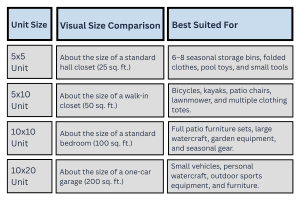
For more help matching your items to a space, visit our storage unit size guide or reach out to a local facility team.
Frequently Asked Questions
Q: What items are not allowed in a self-storage unit?
Storage facilities rent space for general household and business goods. Prohibited items include perishable foods, living plants, animals, flammable liquids (such as gasoline, propane, or paint thinner), explosives, and illegal substances. Always drain gasoline and fuel from power tools and lawn equipment before moving them into your unit.
Q: Can clothing be kept in a self-storage unit without getting ruined?
Yes, clothing can stay in good condition when properly prepared and packed. Make sure garments are completely washed and dried before storage to avoid set-in odors. For long-term seasonal storage, plastic bins with locking lids offer better protection against dust and moisture than cardboard boxes.
Q: What is climate-controlled storage?
Climate-controlled storage units are indoor spaces where the temperature is regulated between 55°F and 80°F year-round. This helps mitigate damage caused by extreme temperature fluctuations and excessive humidity, which is beneficial for fabrics, electronics, wooden furniture, and sensitive materials.